 Templates & Marketing Resources
Why one real estate one-pager can't serve buyers and sellers
One page, three readers: what to put on an open house sheet, a buyer fact sheet and a weekly seller update, and which facts on the page carry rules.

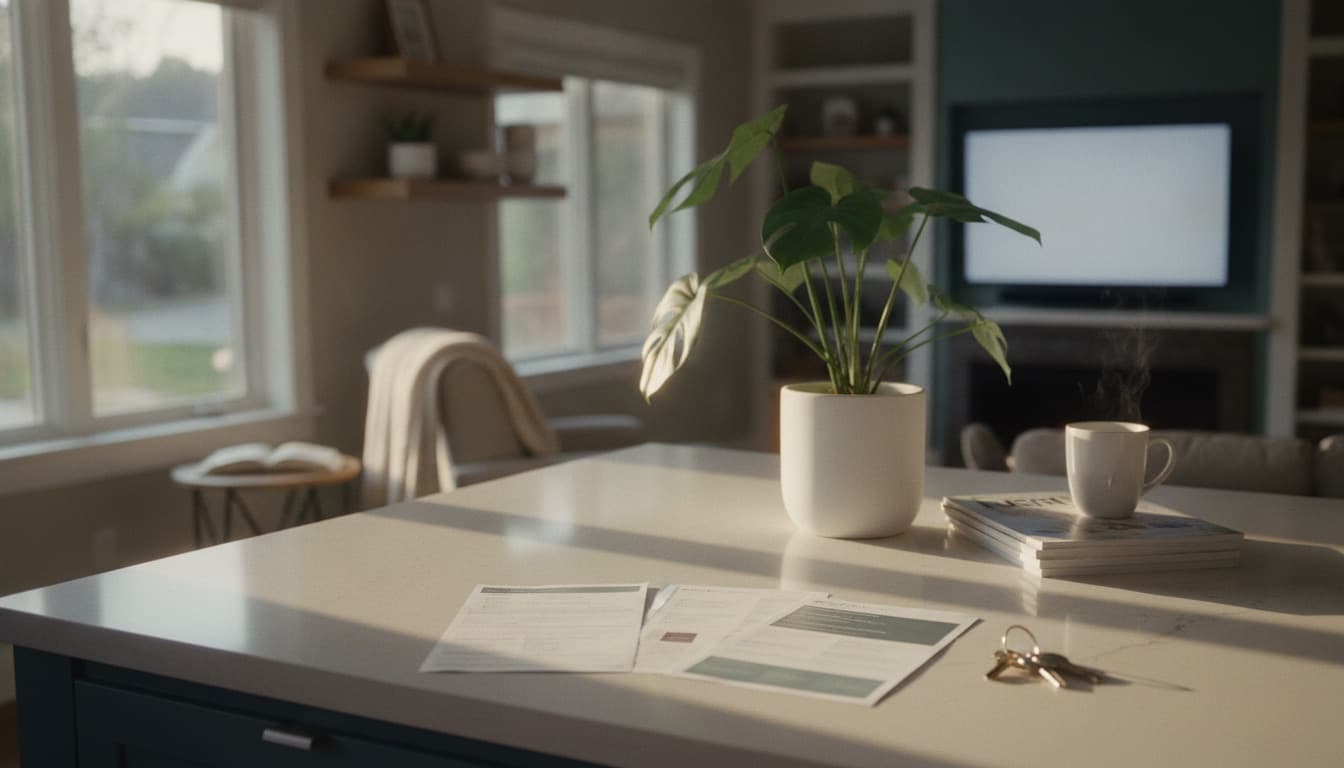
You already make a one-pager for every listing. It's the sheet you build the night before the open house: exterior photo, price, beds and baths, your headshot, fifty copies. On Saturday it sits on the kitchen island. A few go home in buyers' bags. On Monday, when the seller asks how the weekend went, the same PDF goes out as an email attachment.
That's one page doing three jobs for three readers, and it was built for none of them. The visitor at the island can't read nine-point type from where they're standing. The buyer who took it home wanted the roof age and the HOA fee and got your tagline. The seller wanted to know what happened this week and got a flyer for their own house.
What should a real estate one-pager include?
A real estate one-pager should include only what its reader needs for their next step, so the contents change with the reader:
1. Open house sheet: the price, one photo and a QR code, in type large enough to read from across a counter.
2. Buyer fact sheet: the facts a buyer gets asked later, such as year built, roof and HVAC age, HOA fee and taxes.
3. Weekly seller update: the week's activity numbers, what was done and one recommendation.
What is a real estate one-pager?
A real estate one-pager is a single page that sums up one listing for one reader. Search the term and the results mix three different documents: a sheet about a property, a deal summary for investors, and a profile of the agent. This post is about the first.
In practice the page goes by other names. Real estate agents call it the feature sheet, the fact sheet, the info sheet, or just "the flyer." The names are part of the problem, because each one makes it sound like a single document. It's closer to a format. What goes on the page depends on who picks it up.
Is a one-pager the same as a flyer, a feature sheet or an MLS listing sheet?
Feature sheet, fact sheet and info sheet are working names for the same thing: one page about one listing. A flyer is the version built to be remembered after the buyer leaves. An MLS listing sheet is something else, the report your MLS generates from the listing record.
Five names for a page about a listing, sorted by the job each does
| What it's called | Who reads it | Its job | Do you design it? |
|---|---|---|---|
| One-pager | Whoever it was written for | Sum up one listing for one reader's next step | Yes |
| Feature sheet, fact sheet, info sheet | Buyers who want details | Hold the facts and updates worth keeping | Yes |
| Flyer | Buyers, after the open house | Be remembered: one photo, one reason to care | Yes |
| Brochure | Buyers of a home with a longer story | Tell that story across several panels or pages | Yes |
| MLS listing sheet | Other agents and their clients | Show the listing record as the MLS holds it | No, the MLS generates it |
The real estate flyer has a narrow job, which is to survive a week on a kitchen counter. When a home has more story than one page can hold, that's a real estate brochure. A flyer is one kind of one-pager. The buyer fact sheet and the seller update are two others, and a flyer was never meant to do their jobs.
Healthcare teams use a four-part format to tell a colleague about a patient: the situation, the background, an assessment, and a recommendation Institute for Healthcare Improvement. The patient's chart holds far more than that, and the format exists because the listener has to act on one short message. Each of the three sheets below is that kind of message, built for a different listener.
What goes on an open house sheet?
An open house sheet carries the price, one photo and a QR code, set in type a visitor can read from across the counter. It's the display copy: one or two sheets in a stand on the island, read standing up by someone with a phone in one hand, in the few seconds before they move to the next room.
This is where most templates let you down. They're designed to look good on a screen at full zoom, with a photo grid and a paragraph of remarks. So run one test before you print anything in bulk. Print a single copy, set it on the island and step back two paces. Whatever you can't read from there may as well not be on the sheet.
What earns its place on an open house sheet
Include
- Price and address, largeThe two things every visitor checks first. If they have to pick the sheet up to find the price, the type is too small.
- One photoThe exterior or the best room. One image at size beats four in a grid.
- Three or four facts the walk-through won't showThe year the roof was replaced, the HOA fee, the lot size. They're standing in the kitchen and can see the kitchen. If the facts won't fit at a size you can read from two paces, cut to two.
- A QR codeTo the full listing or the listing video. The phone is already in their hand.
- Your name, brokerage and phone numberAt the bottom, readable from the same two paces.
Skip
- The full MLS remarksA paragraph nobody reads standing up. It belongs on the page the QR code opens.
- A grid of six photosThey are inside the house. They don't need thumbnails of it.
- Room-by-room dimensionsThat's the fact sheet's job, for the buyer who asks.
The stack visitors carry out is a different sheet. That one is a flyer, and it has its own standard in the fridge test. You can build both from one layout, with the display copy set larger and stripped back. For getting people through the door to begin with, open house marketing ideas covers the five days before.
What goes on a buyer fact sheet?
A buyer fact sheet carries the facts a buyer gets asked that evening: year built, roof and HVAC age, HOA fee, taxes. It's the page that goes home with the visitor who lingered, and it gets read sitting down, often by someone who wasn't at the showing.
That second reader is why the page exists. A partner who couldn't make it, or a parent helping with the down payment, will ask what the listing portal doesn't answer cleanly. How old is the roof? What does the HOA fee cover? What were the utility bills last winter? A buyer who can answer from one page keeps your listing in the conversation. Save it as a PDF as well, because this is the sheet that gets texted to the person who wasn't there.
None of this undoes the rule for flyers, where a sheet that reads like a data table gets dropped. The fact sheet is for a later moment and a narrower reader: the buyer who has already decided the house is worth a second look. Keep a short stack by the sign-in and offer one to anyone who asks a detail question. It's marketing, so it doesn't replace the seller's disclosure forms.
What earns its place on a buyer fact sheet
Include
- The basics, in one lineBeds, baths, square footage with its source, lot size, year built. One line, not a table.
- The age of the expensive thingsRoof, HVAC, water heater, windows, each with the year it was replaced.
- What it costs to ownAnnual property taxes, the HOA fee and what it covers, and average utility bills if the seller will share them.
- Updates, with yearsA dated list of what's been redone reads as a maintained home. An undated one reads as a sales pitch.
- What stays and what goesAppliances, window treatments, the wall-mounted TV, the shed, worded the way the listing states it. The contract decides in the end.
- The school district, by nameName the district and stop. Leave the adjectives to the buyer's own research.
- A line saying where the facts came fromFor example: 'Information from the seller and public records. Buyer to verify.' Your brokerage may have wording it requires.
Skip
- Lines about who the home suitsDescribe the property, never the buyer. The rules section below explains why.
- Anything you haven't verifiedIf the seller isn't sure when the roof was done, leave it off or mark it 'per seller'.
Two parts of this sheet you don't have to write from scratch
The short description at the top and the "what's nearby" block are the two parts that take longest to write. Dunphy has a free tool for each.
1. The description. Give the listing description generator a few of the home's features and it writes three versions. Pick one and trim it to fit the top of the sheet.
2. What's nearby. Type the address into Neighborhood highlights and it finds nearby schools, parks, grocery stores, transit and places to eat, with the real distance to each.
Neither one needs an account. Give the result a quick read against the listing before you print.
For the paragraph itself, property listing description examples shows what a short version looks like next to the full MLS one.
What should a weekly seller update include?
A weekly seller update should include the week's activity numbers, what buyers said, what was done and one recommendation, with no marketing voice anywhere on the page. It's the one-pager your seller reads most closely, and it's the one the template galleries skip.
Template galleries are full of buyer-facing sheets, and a version written for the seller is hard to find in them. Yet the seller is the only one of the three readers who hired you, and from their side a listing is mostly silence: a showing on Tuesday, nothing until Saturday, and no way to tell a slow week from a normal one. The other two pages sell the house. This one reports on the selling, so it should read like a report.
Your showing software may already send the seller an activity report with showings and feedback. That covers the first row or two of the table below. The rest is yours to write, and it's the part a seller can't get from a dashboard: what you did, what changed nearby, and what you'd do next.
An illustrative weekly seller update. The example lines are invented to show the format; they are not from a real listing.
| Section | What goes in it | Example line |
|---|---|---|
| This week's activity | Showings, open house visitors, online views and saves, each beside last week's figure | 4 showings (3 last week). 11 groups through Saturday's open house. |
| What buyers said | Feedback grouped by theme, in their words where you have them | Feedback came back from two of the four showings. Both mentioned the yard; one asked how old the roof is. |
| What we did | The marketing completed this week | Posted the listing video Thursday. Emailed the buyer list Friday. |
| What changed around us | New, pending and sold listings a buyer would compare with yours | One new listing two streets over, similar size, priced $15,000 lower. No price changes among the others. |
| What I'd change | One recommendation, with the reason | Hold the price one more week and swap the lead photo for the yard shot. If showings haven't picked up by next Friday, we talk about price. |
| Decision needed | What you need from the seller, and by when | A yes or no on the photo swap by Tuesday. |
Two habits keep it honest. Put the bad numbers on the page at the same size as the good ones, because a seller who finds out about a slow week some other way stops trusting the rest of your updates. And end on one recommendation. A list of five options hands your job back to the seller.
The promise to send it is worth making at the listing appointment. "You'll get one page from me every Friday" is a specific commitment, and a listing presentation tends to be won on specifics. I don't have a study for this, but I'd bet that of the three one-pagers, the seller update is the one most likely to earn your next listing. It's what a past client describes when a neighbor asks how you were to work with.
Which facts on a one-pager carry rules?
Three kinds of statement on a buyer-facing one-pager have a published rule behind them: the square footage, any wording about who the home suits, and how your brokerage is identified. Most of the rest is judgment.
Three statements on a one-pager that have a published rule behind them
| On the page | Where the rule comes from | What to print |
|---|---|---|
| Square footage | Fannie Mae Selling Guide, which holds appraisers to the ANSI Z765-2021 standard | The figure with its source, and below-grade space on its own line |
| Who the home suits | Fair Housing Act, 42 U.S.C. §3604(c) | The property's features, never a type of buyer |
| Your brokerage | NAR Code of Ethics, Standard of Practice 12-5 | The firm's name, in type a reader can find |
Square footage. On loans sold to Fannie Mae, appraisers must follow the ANSI standard when they measure and report a home's square footage, and they're told to report below-grade areas separately Fannie Mae Selling Guide. The requirement binds appraisers, not you. It matters to your sheet because the appraiser's number is the one yours gets compared with. So print the same figure your MLS listing shows, say where it came from ("1,850 sq ft per tax record"), and keep a finished basement on its own line.
Who the home suits. The Fair Housing Act makes it unlawful to publish an advertisement for the sale of a dwelling that indicates a preference based on race, color, religion, sex, handicap, familial status or national origin 42 U.S.C. §3604(c). You know this one from licensing. It's here because a one-pager is where the tagline creeps back in: "perfect for a young family" points at familial status, and "four bedrooms and a fenced yard" gives the buyer the same information without it.
Your brokerage. If you're a REALTOR®, the Code of Ethics says you can't advertise a listed property without disclosing your firm's name "in a reasonable and readily apparent manner" NAR Code of Ethics. On a one-pager that means the brokerage name in readable type, not a logo shrunk into a corner. Your state's license law and your MLS rules may add requirements of their own, such as a license number.
This is a marketing post, not legal advice. Your broker and your state's rules have the final word.
Where do you get a real estate one-pager template?
The free templates are at Canva and Adobe Express, filed under real estate flyers, and either works for the open house sheet and the buyer fact sheet. Choose by reader before you choose by look. A layout with four photo slots and small type will fail the two-pace test however good it looks on screen.
The seller update needs no template. It's six headings in a document, the ones in the table above, saved once and filled in every Friday.
What to do this week
- Print your current sheet, set it on a counter and step back two paces. Circle what you can still read. Keep that, and enlarge or cut everything else.
- Ask your seller for the dates that matter: roof, HVAC, water heater, windows and the last big update. Build the buyer fact sheet around them.
- Type the six headings of the seller update into a document and send the first one this Friday, even if the week was quiet.
- Before anything prints, read each buyer-facing sheet for the three statements with rules: the square footage and its source, any line about who the home suits, and your brokerage name.
Frequently asked questions
What is a real estate one-pager?
What makes a good one-pager?
How long should a one-pager be?
Can ChatGPT make a real estate one-pager?
What is a feature sheet in real estate?
Is a one-pager the same as an MLS listing sheet?
Dunphy is the AI marketing agent for real estate listings. A one-pager holds the facts, and the QR code on it needs somewhere to go. Dunphy turns the listing photos you already have into the video that code opens. Photos in. Video out.

Written by
Matthew JohnCo-founder & CEO, Typito AI
Co-founder and CEO at Typito AI. I've been dabbling with video storytelling for 15 years and every day on the journey has been exciting. At Typito we're building Dunphy — the AI video agent for real estate — alongside the broader Typito video stack. Writing here about real-estate marketing, video, and integrity in AI-generated content.