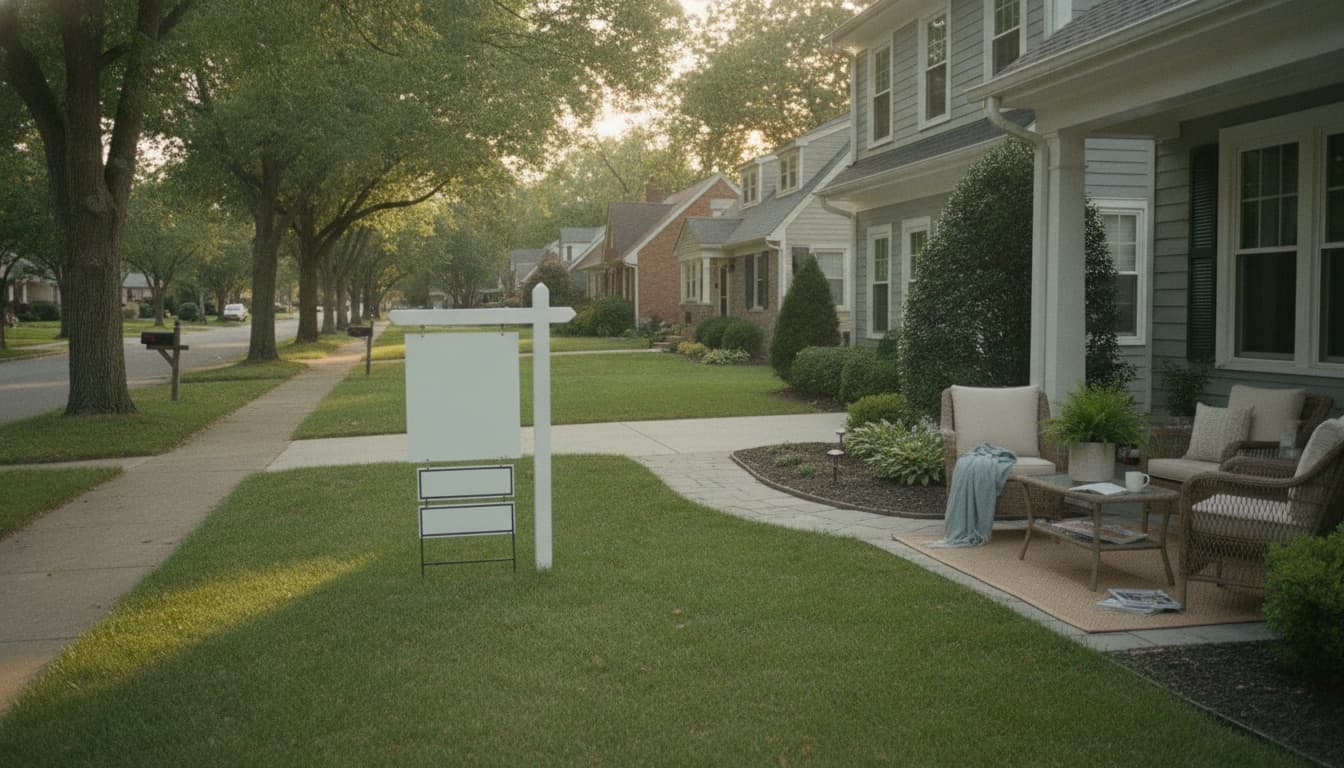
 Property Listing Promotion
4 realtor marketing strategies that win the next listing
Every list tells you to do everything. Most sellers call one agent, so the real question is how the next one comes to pick you. Four strategies, and how to choose.

You already market. You post the new listing, mail a just-sold card when you remember to, boost a Reel now and then. Somewhere in your notes there's a list of thirty-odd marketing ideas you meant to work through.
Lists like that share a gap. They tell you what you could do and never what to leave out, so every guide to realtor marketing strategies ends up as a menu.
Sellers give you a way to choose. They rarely shop for an agent: most make one call, to someone they already had in mind. So a strategy has a narrower question to answer than "how do I get more leads." How does the next seller in your market come to have you in mind, and what have they seen of your work by then?
What is the best marketing strategy for a real estate agent?
The best marketing strategy for a real estate agent is the one that puts proof of how you market a home in front of likely sellers before they need an agent. Four strategies can do that. At 10 to 30 listings a year you won't run all four well, so pick a primary and one support, starting from the top of this list:
1. Past clients and sphere, because most sellers use an agent who was referred to them or one they've worked with before.
2. A small neighborhood farm: the blocks around each of your listings.
3. Local social video, so people who don't know you can watch you work.
4. Paid ads, last, and only behind content that already shows a listing.
Which realtor marketing strategies actually work?
Four realtor marketing strategies do the job: past clients and sphere, a neighborhood farm, local social video, and paid ads. Each one can reach a homeowner before they start looking for an agent, which is when the choice gets made.
Most of what fills the usual lists is a tactic inside one of those four. An email newsletter is how you work a sphere. Postcards and open houses are how you work a farm. A Google Business Profile and client reviews support all four, because a referred seller will often look you up before calling.
So you can tick off thirty tactics and still not have a strategy. A strategy says who hires you next and what they'll have seen before they call.
The four strategies, and what each one runs on
| Strategy | Who it reaches | What it costs you | The listing proof it carries |
|---|---|---|---|
| Past clients and sphere | People who already know how you work | Hours: a small, steady monthly habit | A note or call with your latest listing in it, so they have something current to pass on |
| Neighborhood farm | Homeowners on the blocks around your listings | Dollars and hours: mail, door hangers and open houses, repeated | Just-listed and just-sold on a street where they can see the sign |
| Local social video | Locals who don't know you yet | Hours: a post or two every week | The listing video itself, and what you say about the choices behind it |
| Paid ads | Strangers, on demand | Dollars, for as long as you want the reach | Only what you put behind the spend. An ad with no listing in it carries none |
The order follows from who each one reaches. The first two reach people who can already place you, because they've worked with you or driven past your sign. The last two have to introduce you first, and that takes longer.
Between those last two, real estate agents themselves rate social well above paid. In NAR's 2025 technology survey, 39% of agents named social media as a tool that gives them the highest number of quality leads, and 12% named digital ad campaigns.
What we'd skip is anything that asks for the appointment without showing the work. The "thinking of selling?" ad with a headshot is the usual one, along with the mailer that's all logo. They cost the same as marketing with a listing in it, and they give a homeowner nothing to judge you by.
How do sellers actually choose a real estate agent?
Mostly without shopping around. In NAR's 2024 Profile of Home Buyers and Sellers, which covers sales closed between July 2023 and June 2024, 81% of recent sellers contacted only one agent before choosing who would sell their home. And 66% used an agent who was referred to them or one they had worked with before.
The same report says what those sellers were hiring for. They put three tasks at the top: help marketing the home to potential buyers (22%), pricing it competitively (20%), and selling within a specific timeframe (18%). The most important factor in choosing the agent was reputation, at 35%. NAR's 2025 edition lists the same three priorities and puts the share of sellers who sold with an agent's help at 91%.
Here's how we read those numbers, and this part is our interpretation, not NAR's. A referral is one person describing your work to another, and a reputation is what people have seen or heard of it. Both need something to go on. Most of the job gives a homeowner nothing to see, because pricing judgment and negotiation happen in private. The marketing of a listing happens in public, and it's also the task sellers say they want most.
So the contest for a listing is mostly settled before an appointment is booked. What your marketing can do is decide who gets the one call.
Some sellers do interview two or three agents, and for them the appointment is a real contest. A strong listing presentation is how you win that one. It's the less common case.
Nobody interviews three hairdressers. You see a cut you like on someone you know, ask who did it, and book that one person, so a stylist's best advertising walks around town on other people's heads. Your listings are those haircuts: the work a future seller sees on someone else's home before they ever ask for your name.
How do you market yourself as a realtor? Let the listing do it
Show how you marketed the last home you listed. It's the only sample of the job a future seller can inspect before they call, so it does more for you than a headshot or a slogan.
A seller can't test-drive an agent. What they can see is the sign, the photos, and whether your listing turned up in their feed with a video or as three dark pictures and an address.
That's why a listing post does two jobs through one feed: it finds a buyer for this home, and it shows the next seller how you work. Most posts only do the first. Here are two versions of the same announcement, written as an illustration rather than taken from a real listing:
Sells the house: "Just listed! 3 bed, 2 bath near the park. Open house Sunday 1–3. DM for details."
Sells the house and shows the work: "Just listed near the park. We shot the photos at golden hour because the backyard is what sets this one apart, so the video opens there. Open house Sunday 1–3."
A buyer gets everything they need from the second one. A homeowner three blocks away also gets to read a decision you made on a seller's behalf, and they'll remember it when it's their turn. Run the caption past your seller first, the way you would the listing description. It's their home you're describing.
It also gives you a check to run before you spend an hour or a dollar on anything new. Call it the next-seller test: would a homeowner two blocks from your last listing know how you marketed it? If the honest answer is no, a new channel won't fix it, because the work isn't reaching the people most likely to hire you for the same job. It pairs with the recognition test in our piece on real estate branding, which asks whether your listings look like one agent's work.
Which marketing strategy should a real estate agent pick?
Pick the one your last ten clients already point to, then add one more to support it. A primary and a support is about what fits in a working week at 10 to 30 listings a year.
Start by writing down where those ten clients came from: referral, repeat, a neighbor of a listing, an open house, social, a paid lead. The pattern is usually obvious once it's on paper, and it tells you which strategy is already paying.
Pick a primary strategy, then one support
When
Most of your last ten clients were referrals or repeats
Use
Past clients and sphere first, local social video as support
It matches how most sellers choose, and your feed keeps you in view between check-ins
When
Three or more of your listings a year fall in the same few neighborhoods
Use
Farm those blocks, with sphere as support
You have fresh proof to mail, and signs the neighbors already drive past
When
You're new, with no listings of your own yet
Use
Sphere first, and borrow proof
Host open houses for agents in your office and make local video, so people see you working before you have a sale to show
When
You have budget but few spare hours
Use
Paid ads behind your best listing content
Ad reach lasts only as long as you pay for it, so put the money behind posts that already show a listing
One fair objection: plenty of real estate agents build a business by calling expired listings and for-sale-by-owner sellers, and it works for the ones who put in the hours. That's prospecting, a different job from marketing, and nothing here argues against it.
Once you've picked, size it to the hours you have. Our real estate marketing plan starts from your weekly hours and splits them across per-listing, agent-brand and past-client work. If the decision in front of you is how to position one property rather than yourself, that's covered in property marketing strategies.
How do you turn one listing into marketing for the next one?
Run the same five moves on every listing, each aimed at a different group of future sellers. Most of the material is what you already make to sell the house.
- 1
Listing day: say what you did, in the listing post
Once the listing is live in your MLS, post the listing video with a caption that names one marketing decision you made for this home. The post still sells the house, and a future seller reading it learns how you work.
- 2
The same week: tell the blocks around it
Send a just-listed card or a door hanger to the nearest homes, the ones that can see the sign. Keep the list small enough that you can afford to mail it again when the home sells, and again after that.
- 3
Before the open house: invite the nearby owners too
Add the surrounding homes to the invitation you send your buyer list. The open house stays open to everyone. Nearby owners who come see how you run one, and how many people you brought through.
- 4
When it sells: send the just-sold, and say what you did
Add one factual line about the marketing: the video, the open house, where it ran. Describe what you did rather than what it caused, check your MLS's rules on advertising a sold listing, and ask the seller before sharing anything that isn't already public.
- 5
The month after: take it to your past clients
Send a short note with the video and a sentence on what you'd do the same way for them. A check-in is easier to write when you have something to show.
What changes from your usual routine is who you have in mind. Each step still serves the listing, and each one is also seen by someone who may sell next. The detail behind the steps is in how to market a property listing, in real estate postcard ideas (why a small farm mailed repeatedly beats one big drop), and in our open house marketing ideas.
Between listings, make a neighborhood or market video. A listing video stops reaching new people once the home sells, and a local video keeps bringing them in.
Short on time for the listing-day posts?
Two of our free tools cover the writing, with no sign-up:
1. The MLS-to-social translator turns your MLS listing details into social posts.
2. The neighborhood highlights writer drafts the local highlights for a listing, which you can reuse in farm content.
All of this depends on every listing leaving something behind to show, including the one that lands in a week with two closings. While you're doing the parts of this job nobody else can do, the pricing conversation and the Saturday open house, we're building Dunphy to carry the marketing of each listing alongside you. It's the AI marketing agent for real estate listings, and it starts with the listing video, made from the photos you already took.
Frequently asked questions
What is the best marketing strategy for real estate agents?
How do you market yourself as a new real estate agent?
If you had $1,000 to spend on marketing yourself as a realtor, where should it go?
What is the 80/20 rule for realtors?
Dunphy is the AI marketing agent for real estate listings. It starts with the listing video, so every home you list leaves proof of how you market. Photos in. Video out.

Written by
Matthew JohnCo-founder & CEO, Typito AI
Co-founder and CEO at Typito AI. I've been dabbling with video storytelling for 15 years and every day on the journey has been exciting. At Typito we're building Dunphy — the AI video agent for real estate — alongside the broader Typito video stack. Writing here about real-estate marketing, video, and integrity in AI-generated content.